
The Often-Overlooked Step Before Lead Testing: Turbidity Screening for EPA Method 200.8
.jpg?resolution=2210x1244&quality=95&type=webp)
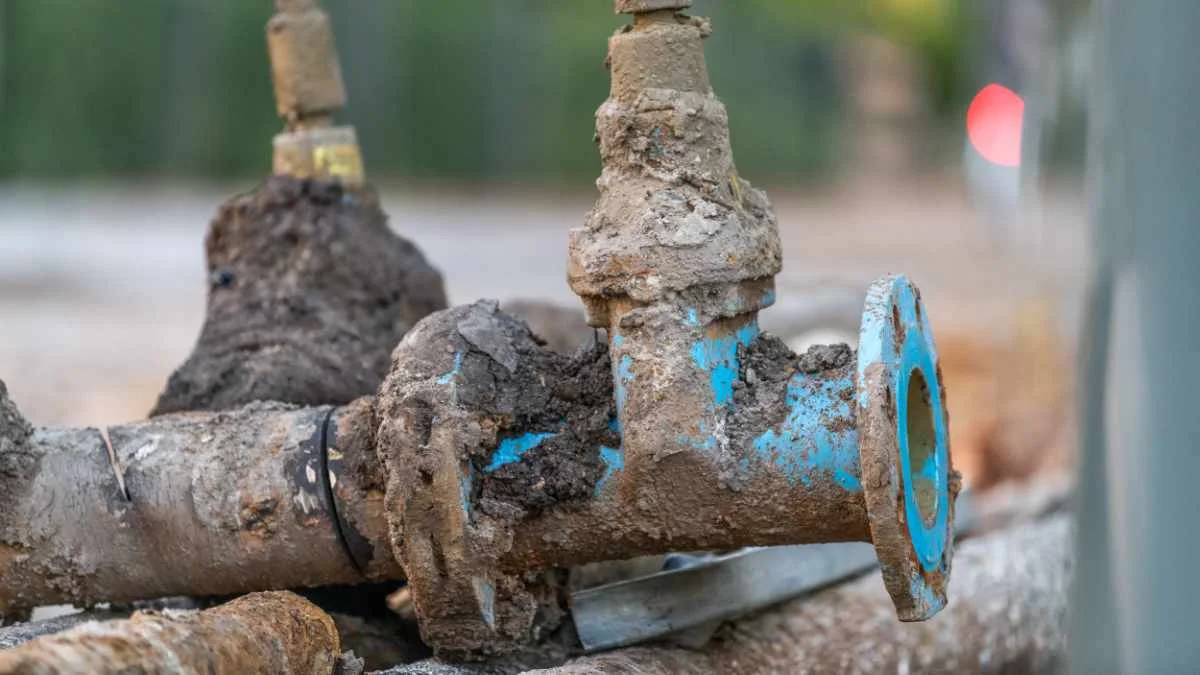
Corroded aging drinking water pipes and valves illustrating infrastructure challenges that drive lead monitoring and drinking water testing requirements.Introduction
Lead testing continues to receive increased attention throughout the drinking water industry. Recent updates to the EPA's Lead and Copper Rule require more rigorous monitoring and the identification and replacement of lead service lines, increasing focus on accurate and defensible data in lead testing.
While most discussions surrounding lead analysis focus on ICP-MS instrumentation, calibration standards, and detection limits, an important step often receives far less attention: turbidity screening.
For laboratories analyzing drinking water samples by EPA Method 200.8, turbidity can determine whether a sample can be analyzed directly or requires digestion before analysis. Understanding this requirement—and performing it consistently—is an important part of generating reliable metals data.
Why Does Turbidity Matter?
Turbidity is a measure of the suspended particulate matter present in a water sample. These particles can include sediment, corrosion products, rust, and other insoluble materials that may contain or adsorb metals.
When samples contain elevated levels of suspended solids, dissolved metals are no longer the only source contributing to the final result. Metals associated with particulate matter may also be present. Because of this, samples exceeding the turbidity threshold specified by EPA Method 200.8 require additional sample preparation before analysis to ensure representative results are obtained.
The turbidity measurement itself is typically straightforward. However, when hundreds of drinking water samples are moving through a laboratory each week, even a simple screening step requires analyst time and careful attention to detail.
A Routine Task That Adds Up
In many laboratories, turbidity screening is performed manually using a benchtop turbidimeter. Samples are removed from racks, measured individually, documented, and then either routed directly to analysis or sent for digestion.
The procedure is familiar to most analysts, but it is also repetitive. During periods of increased sample volume, these manual measurements can consume significant laboratory time.
The importance of consistency should not be overlooked either. Turbidity screening serves as a decision point that determines the next step in sample preparation. A reliable measurement helps ensure samples requiring digestion are properly identified before metals analysis begins.
Automating Turbidity Screening
Laboratories automate many aspects of metals analysis, from sample digestion to analysis and data handling. Turbidity screening is another step that can be automated.
The SEAL MiniLab AR for Turbidity is well-positioned as a streamlined approach to automate the measurement of turbidity prior to lead and metals analysis. Samples are automatically presented to the turbidity meter, measured, and documented without the need for continuous analyst involvement. Once results are recorded in the software, customized exports to LIMS can be easily generated for final reporting.
By automating this screening process, laboratories can standardize measurements, reduce repetitive sample handling, and quickly identify samples that exceed the 1 NTU threshold before ICP-MS analysis.
The system's compact benchtop footprint allows it to fit easily into existing laboratory environments, while direct data export and LIMS integration simplify sample tracking and record keeping.
Preparing for the Future of Drinking Water Testing
As drinking water monitoring continues to evolve, laboratories are placing greater emphasis on consistency, traceability, and data quality. Recent regulatory changes and ongoing lead service line replacement programs are expected to keep lead and metals testing in the spotlight for years to come.
While turbidity screening may not be the most visible part of the analytical process, it remains an important step in ensuring samples are properly prepared before metals analysis. Automating this routine measurement helps laboratories maintain consistency while allowing analysts to focus on the more technical aspects of producing high-quality analytical results.


.jpg?resolution=856x534&quality=95&type=webp)