
What is a Continuous Flow Analyzer?
.jpg?resolution=2210x1244&quality=95&type=webp)
Introduction
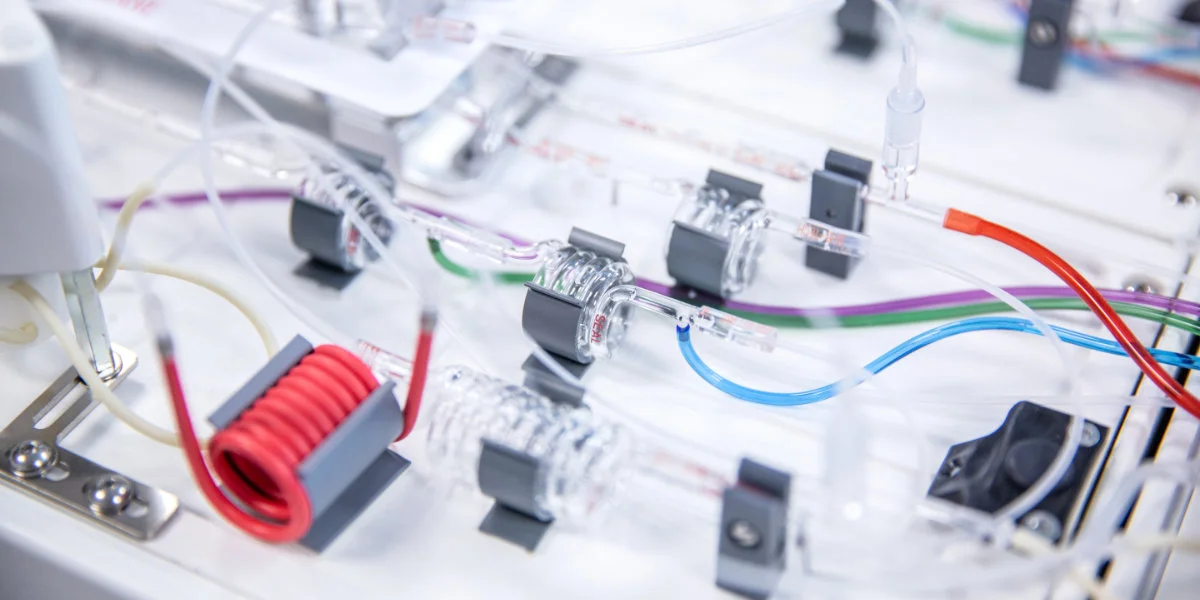
A continuous flow analyzer is an automated laboratory instrument used to perform chemical analysis by moving samples and reagents through a continuous fluid stream. Instead of an analyst preparing each reaction manually, the analyzer automates the process by pumping samples, reagents, and carrier solutions through tubing, mixing coils, heating baths, and detectors to complete the chemical reaction and measure the final result.
Continuous flow analyzers are widely used in environmental laboratories for nutrient analysis in water, wastewater, seawater, drinking water, soil extracts, plant tissue extracts, and other sample types. They are especially valuable for laboratories that need reliable automation, low detection limits, high throughput, and consistent performance on routine wet chemistry methods.
The term “continuous flow analysis” is often used broadly, but it can refer to several related technologies, primarily segmented flow analysis and flow injection analysis. Understanding the differences between these technologies can help laboratories choose the right automation platform for their methods, sample types, and throughput needs.
What Does a Continuous Flow Analyzer Do?
At its core, a continuous flow analyzer automates wet chemistry methods by moving samples and reagents through a highly controlled fluid path.
Many of these methods are colorimetric, meaning the chemistry produces a colored compound in response to the analyte of interest. The analyzer then measures the absorbance of that color at a specific wavelength and compares the response to a calibration curve to calculate the analyte concentration.
Continuous flow analyzers automate steps that would otherwise be performed manually, including:
- Sample introduction
- Reagent addition
- Mixing
- Heating
- Sample digestion
- Dilution
- Distillation
- Dialysis
- Gas diffusion
- Reaction timing
- Photometric, fluorometric, or amperometric detection
- Result calculation from calibration curves
How Does a Continuous Flow Analyzer Work?
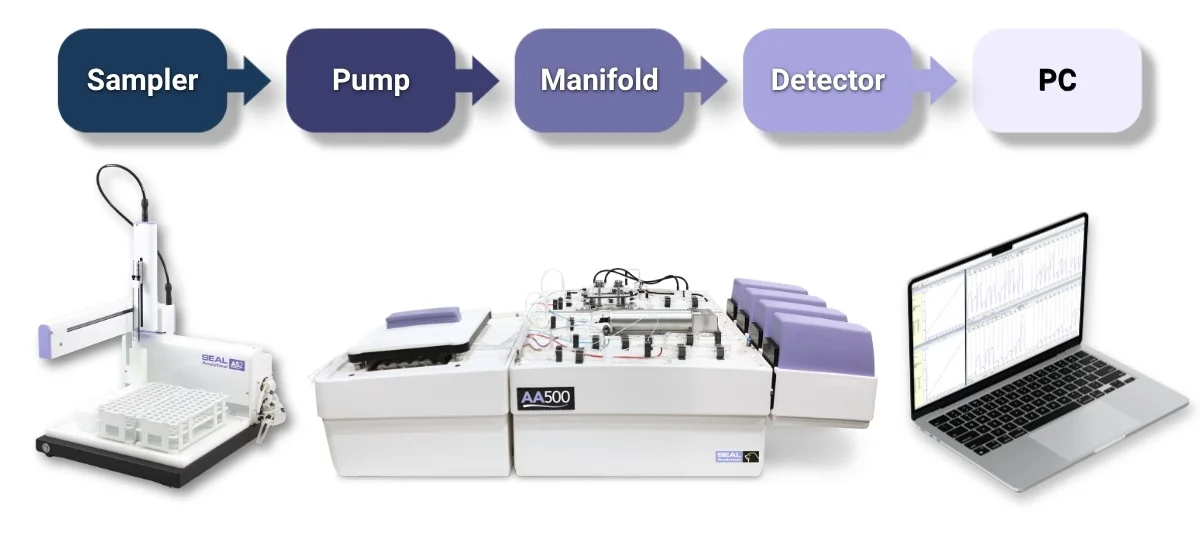
Continuous flow analyzers use a peristaltic pump and flow-rated pump tubes of various internal diameters to move samples and reagents at specific ratios through a defined analytical pathway. This pathway is often called a channel or manifold.
A typical continuous flow analysis method follows this general workflow:
1. Sample Introduction
Samples are introduced into the system from an autosampler. Each sample enters the flow stream in a controlled sequence using a peristaltic pump and flow-rated pump tube of a specific internal diameter to control the flow volume. The sample is usually followed by a wash solution or carrier stream to separate one sample from the next.
2. Reagent Addition
Reagents are added at specific points in the manifold, also using the peristaltic pump and flow-rated pump tubes. The sample and reagents combine in precise ratios as they move through the tubing.
3. Mixing and Reaction
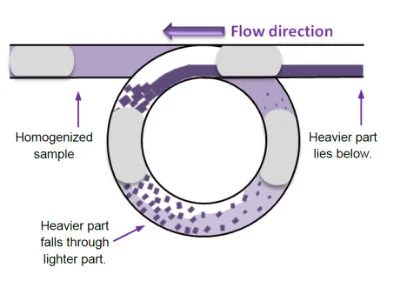
The sample and reagent mixture travels through mixing coils, heating baths, digestion coils, or other reaction components. These components provide the time, temperature, and mixing needed for the chemistry to fully develop.
4. Separation or Pretreatment, When Needed
Some continuous flow methods include automated sample preparation steps. For example, a method may use:
- Sample dilution to ensure high-range samples are within the calibration range
- Distillation or gas diffusion to separate analytes, such as ammonia or cyanide, from the sample matrix into a clean sample stream
- Dialysis to reduce interferences and remove particulates from complex samples
- UV digestion to convert complex compounds to simple analyte forms before detection
- Other complex steps to support specific method requirements
This ability to integrate sample preparation directly into the analytical workflow is one of the major strengths of continuous flow analysis.
5. Detection
Once the reaction is complete, the sample passes through a detector. Depending on the method, detection may be performed by measuring absorbance, fluorescence, electrochemical measurement, and sometimes other methods such as flame photometry.
6. Calculation
The analyzer software records the continuous signal coming from the detectors. As samples pass through the detector, the software charts the change in signal, creating a peak with a height (in segmented flow analysis) or an area (in flow injection analysis) in relation to the amount of analyte in the sample. The software calculates the concentration of the analyte in each sample by comparing the peak height or area to a calibration curve created from a series of calibrants (standards of a known analyte concentration). The results are then recorded in the software along with other statistics from the analysis.
Continuous Flow Analysis, Segmented Flow Analysis, and Flow Injection Analysis: What Is the Difference?
The terms continuous flow analysis, segmented flow analysis, and flow injection analysis are sometimes used interchangeably. While similar, each term has its own meaning:
Continuous Flow Analysis
Continuous flow analysis is the broad category of automated wet chemistry systems that move samples and reagents through tubing in a continuous stream. Both segmented flow analysis and flow injection analysis fall under this broader family of flow-based techniques.
Segmented Flow Analysis (SFA)
Segmented flow analysis, often abbreviated as SFA, injects air or inert gas bubbles at a set interval to separate each sample into multiple segments as it moves through the tubing. These bubbles help reduce sample-to-sample carryover, improve mixing, visualize the flow through the system, and maintain separation between samples and wash solution during the reaction.
Segmented flow analyzers are commonly used for high-throughput nutrient analysis, trace-level detection, and methods that require longer reaction times or integrated sample preparation.
Flow Injection Analysis (FIA)
Flow injection analysis, often abbreviated as FIA, injects a sample into a moving carrier stream without using air segmentation. The sample disperses into the carrier stream and reacts with reagents as it moves through the system.
Flow injection analyzers can be fast and efficient for certain applications, but the lack of air segmentation can make method design, reaction timing, and carryover control different from segmented flow systems.
Click here for a closer look at the differences between segmented flow analysis and flow injection analysis.
AutoAnalyzer
The term AutoAnalyzer has an important place in the world of continuous flow analysis. The original Technicon AutoAnalyzer, developed by Leonard Skeggs, PhD in 1957, was the first continuous flow analyzer and used segmented flow analysis to automate wet chemistry methods. Although it was initially developed for clinical analysis, the technology quickly found value in industrial, environmental, and research laboratories.
The original AutoAnalyzer was later succeeded by the Technicon AutoAnalyzer II, often referred to as the AAII. This was the model used to develop many of the EPA’s nutrient analysis methods and is still referenced in the methodology today. The technology continued to develop after the product line was acquired by Bran+Luebbe, who introduced the AA3 AutoAnalyzer. SEAL Analytical later acquired the AutoAnalyzer product, retaining the team and expertise in SFA from Bran+Luebbe and Technicon, and continued its development with the AA3 HR AutoAnalyzer and, ultimately, the AA500 AutoAnalyzer.
Today, SEAL’s AA500 AutoAnalyzer is the direct descendant of the original AutoAnalyzer technology and represents the latest generation of segmented flow analysis. It is also the world’s first fully automated continuous flow analyzer capable of unattended startup and shutdown, helping laboratories automate routine methods with greater consistency, efficiency, and walk-away operation.
Over time, the term “autoanalyzer” has sometimes been used informally to describe many types of automated chemistry systems, including continuous flow analyzers, flow injection analyzers, and even discrete analyzers that automate similar wet chemistry methods. However, AutoAnalyzer refers to a specific lineage of continuous flow analyzers based on segmented flow analysis.
For laboratories replacing older AutoAnalyzers, segmented flow analyzers, or flow injection analyzers, it is important to compare not only the general instrument category, but also method performance, automation capabilities, software, consumables, technical support, and long-term service availability.
Read more: What is a Discrete Analyzer?
What Are Continuous Flow Analyzers Used For?
Continuous flow analyzers are used in laboratories that need automated, reproducible wet chemistry results across routine sample batches. They are especially common in environmental, agricultural, industrial, and research laboratories.
Nutrient Analysis
Continuous flow analyzers are widely used for nutrient analysis, including:
- Ammonia
- Nitrate and nitrite
- Total nitrogen
- Phosphate
- Total phosphorus
- Silicate
- Chloride
- Cyanide
- Phenol
- Chromium (VI)
- Alkalinity
- Other colorimetric and automated wet chemistry methods
These methods are important in many laboratory workflows because nutrients and related analytes are used to monitor water quality, wastewater treatment performance, soil fertility, agricultural runoff, and environmental change.
Environmental Testing
Continuous flow analyzers are commonly used for:
- Drinking water analysis
- Wastewater monitoring
- Surface water testing
- Groundwater analysis
- Seawater and oceanographic research
- Industrial discharge monitoring
- Soil nutrient analysis
- Tobacco regulatory testing
- Fertilizer quality control
- Analysis of nitrate and nitrite in dairy and food
For environmental laboratories, continuous flow analysis provides a practical way to automate routine methods while maintaining consistency between analysts, batches, and sample types.
Soil, Plant, and Agricultural Testing
Continuous flow analyzers are also used in agricultural laboratories for:
- Soil extract analysis
- Plant tissue analysis
- Fertilizer testing
- Nutrient monitoring
- Research and extension laboratory workflows
These laboratories often process large numbers of samples, making automation especially valuable for improving throughput and reducing manual workload.
Industrial and Other Applications
Beyond environmental and agricultural testing, continuous flow analyzers are used in industrial laboratories for quality control, process monitoring, and compliance-related testing.
Examples include:
- Chemical manufacturing facilities monitoring wastewater discharge
- Food and beverage laboratories measuring routine wet chemistry parameters
- Research laboratories requiring consistent automated analysis
- Contract laboratories processing large sample batches for multiple clients
Why Do Laboratories Use Continuous Flow Analyzers?
1. High Throughput
Continuous flow analyzers are well suited for laboratories that run large batches of samples for the same methods. Samples are split into multiple channels for simultaneous analysis of multiple parameters and move continuously through the system, making these analyzers adept for processing high sample volumes efficiently.
Microflow segmented flow analysis, seen on analyzers like the QuAAtro 39, uses smaller internal diameter tubing for even higher throughput and lower reagent consumption.
2. Excellent Reproducibility
Flow-based methods use controlled pump rates, tubing dimensions, reagent ratios, reaction timing, and detector conditions. This helps produce consistent results from sample to sample and batch to batch.
3. Low Detection Limits
Segmented flow analyzers are especially strong for methods requiring low or ultra-low detection limits. The controlled fluidics, stable reaction conditions, and sensitive detectors make them a strong choice for trace-level nutrient analysis.
4. Automated Sample Preparation
One of the major advantages of continuous flow analysis is the ability to automate sample preparation inline with the analysis. Techniques such as gas diffusion, dialysis, heating, UV digestion, dilution, and inline reaction steps can reduce manual preparation and improve consistency.
5. Proven Method Performance
Continuous flow analysis has been used for decades in environmental and industrial laboratories. Many laboratories rely on flow-based methods because they are well established, familiar to regulators, and effective for routine compliance testing.
6. Efficient Use of Laboratory Staff
By automating repetitive manual chemistry steps, continuous flow analyzers allow analysts to focus on data review and handling, troubleshooting, quality control, and other higher-value laboratory tasks.
Analyzers such as the AA500 segmented flow analyzer go even further with completely automated start-up and shutdown. This allows analysts to walk-away during analysis and even set up automated overnight runs with dilution of over-range samples, instrument cleaning, and shutdown all occurring unattended.
Continuous Flow Analyzer vs. Discrete Analyzer
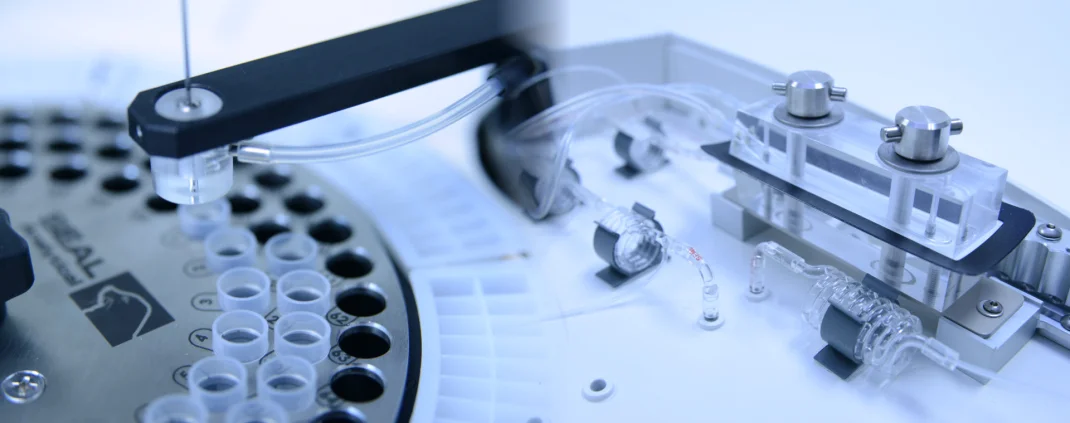
Continuous flow analyzers and discrete analyzers both automate wet chemistry, and often even the same colorimetric methods. However, they do so in different ways. Here we compare the strengths of each technology, primarily considering SEAL discrete analyzers and continuous flow analyzers:
| Feature | Continuous Flow Analyzer | Discrete Analyzer |
|---|---|---|
| Reaction Handling | Samples and reagents move through tubing and manifolds (separated by gas bubbles in segmented flow analysis) | Reactions occur in individual reaction wells or cuvettes |
| Automation Style | Pump-driven fluidics through tubing manifolds with reagent injection points, mixing coils, heating baths, and other apparatuses | Robotic arms dispense samples and reagents into reaction vessels |
| Sample and Reagent Measurement | Flow-rated peristaltic pump tubes | High-precision syringe |
| Ease of Use | Requires more instrument knowledge, fluidic monitoring, easy maintenance | Simple user interface, easy day-to-day operation, easy maintenance |
| Detection Limits | Excellent, especially for trace-level and ultra-low nutrient methods | Low detection limits suitable for many routine environmental methods |
| Sample Preparation | Can integrate inline preparation such as distillation, gas diffusion, dialysis, heating, UV digestion, dilution, and spiking | Offers auto-dilution and sample spiking |
| Method Flexibility | Moderate - some manifolds can run multiple methods, others are dedicated to a specific method | High - each system comes ready to run the full method list |
| Throughput | Extremely high - simultaneous analysis of multiple analytes, standard flow rates up to 70 samples/hour and up to 120 samples/hour with microflow systems | Moderate to High - one detector per system |
| Best For | High-volume labs with a dedicated list of parameters, and/or labs needing inline sample pretreatment (distillation, digestion, etc.) or demanding detection needs | Labs needing flexible, multi-parameter automation with easier day-to-day operation |
Neither technology is universally “better.” The right choice depends on the laboratory’s sample volume, method list, detection limit requirements, staffing, matrices, and workflow preferences.
Many laboratories use both technologies because each offers different strengths.
Segmented Flow Analysis vs. Flow Injection Analysis
Because many laboratories are evaluating replacements for older or discontinued flow injection analyzers, it is helpful to understand how segmented flow analysis and flow injection analysis differ.
Feature | Segmented Flow Analysis | Flow Injection Analysis |
Sample Separation | Samples are separated by air or gas bubbles | Samples disperse into a carrier stream |
Carryover Control | Strong separation between sample zones | Depends heavily on method design and wash conditions |
Reaction Time | Well suited for longer reaction times | Often used for faster reactions |
Method Complexity | Can support more complex chemistries and inline preparation | Often simpler flow paths |
Detection Limits | Often excellent for low-level nutrient analysis | Can be effective, but method-dependent |
Common Use | Environmental nutrient analysis, seawater, wastewater, soil extracts | Routine wet chemistry applications where FIA methods are established |
For laboratories familiar with flow injection analysis, segmented flow analysis may offer a strong path forward when low detection limits, robust carryover control, or more complex automated sample preparation are required.
Click here for a closer look at the differences between segmented flow analysis and flow injection analysis.
How Are SEAL Continuous Flow Analyzers Different?
SEAL Analytical continuous flow analyzers are designed by chemists for chemists, with a focus on method performance, long-term reliability, and practical laboratory operation.
SEAL segmented flow analyzers are widely used for environmental, drinking water, wastewater, seawater, soil, agricultural, and industrial testing. They are built to support laboratories that need dependable automation for routine wet chemistry methods and demanding trace-level applications.
Key differentiators include:
- Proven segmented flow technology for routine and trace-level analysis
- Strong performance on environmental nutrient methods and detectors designed for ultra-low level seawater analysis
- Support for complex automated sample preparation, including gas diffusion, dialysis, heating, and UV digestion
- Multi-test manifolds allowing for multiple parameters to be analyzed on the same channel with minimal hardware
- Multiple detector options, including photometric, fluorometric, and amperometric detection
- Fully automated start-up and shutdown
- Long-term support from chemists, engineers, technicians, and software specialists
- Method expertise built from decades of experience in automated wet chemistry
- and more...
SEAL systems are designed to help laboratories automate demanding methods while maintaining confidence in their data, quality control, and long-term instrument support. Contact a SEAL technical chemist to discuss advantages of SEAL continuous flow analysis specific to your testing.
When Should a Lab Consider a Continuous Flow Analyzer?
A continuous flow analyzer may be a strong fit for laboratories that:
- Run large batches of samples for routine methods
- Need low or ultra-low detection limits
- Perform nutrient analysis in water, wastewater, seawater, soil, or plant extracts
- May require automated sample preparation
- Want to reduce manual wet chemistry steps
- Need established technology for compliance-driven testing
- Are replacing older systems or discontinued flow injection analyzers
- Need long-term support for methods, hardware, software, and chemistry troubleshooting
For laboratories comparing technologies, it is often useful to evaluate both continuous flow analyzers and discrete analyzers. The best solution depends on the specific methods, matrices, detection limits, sample volume, staffing, and workflow needs of the laboratory.
Our experienced team of technical chemists is available to review your needs and help you find the best system for your laboratory.
Conclusion
Continuous flow analyzers have played an important role in automated wet chemistry for decades. By moving samples and reagents through a controlled fluidic stream, these systems help laboratories improve throughput, reproducibility, detection limits, and consistency across routine methods.
Segmented flow analysis and flow injection analysis are both part of the broader continuous flow family, but they offer different strengths. For many environmental laboratories, segmented flow analysis remains a powerful option for high-throughput nutrient testing, trace-level analysis, and methods that benefit from inline sample preparation.
Whether a laboratory is replacing an older flow injection analyzer, evaluating segmented flow analysis, or comparing continuous flow and discrete analyzer technologies, understanding how these systems work is an important first step toward choosing the right automation platform.
Interested in how continuous flow analysis fits into your laboratory workflow?
Explore SEAL Analytical’s continuous flow analyzer range or connect with our team to discuss your application.
Related articles
.jpg?resolution=856x534&quality=95&type=webp)
.jpg?resolution=856x534&quality=95&type=webp)
